| Status: | Active, open to new members |
| Leader: |
Peter Cooke
|
| Group email: | Archaeology group |
| When: | Monthly Every 2nd Thursday in the month 10.30 to 12 |
| Venue: | Mawdesley Village Hall Annexe |
| Cost: | £3 |

If you would like to come along to the below and are not on the circulation list as a Group Member ; or present / discuss a topic, contact Peter Cooke via the Link on the Group Page.
MEETINGS AND TALKS - ALL 10.30 IN MAWDESLEY VILLAGE HALL ANNEX
Thursday May 14th :- The Hanging Gardens of Babylon - a talk by Peter Wade. Peter is an engineer with a particular interest in the archaeology and history of water infrastructure i.e. water supply and drainage etc. You may recall he gave us a fascinating talk a few years ago on the drainage of Croston Moss and a critique of modern flood defences in the area. The Hanging Gardens were one of the Seven Wonders of the World but have never been found. They were part of a grand engineering project in ancient Babylon involving canals, tunnels and pumping for flood prevention, irrigation and defensive purposes. A book by Stephanie Dalley working at the British Museum contains much information about the 'High or 'Hanging Garden' :- see below 'Presentation and Papers' below.
June :- No Session
Thursday July 16th :- a talk on Denisovans, Neanderthals and emergence from the ice age - a talk by Maggie Simms. Maggie is a professional archaeologist and is the national lead for archaeology at u3a . She has worked on short archaeology contracts, for WEA and in teaching and in museums both as a curator and an education officer. So much of the way we are as modern humans is inherited from our distant ancestors. If you like a roaring fire, a sweet treat or a juicy roast, or have a trusty pet dog, you're already more in touch with our distant past than you realise. In this talk we'll go back to time when we can meet three of the peoples whose DNA traces can be found in millions of people around the globe.
Thursday August 13th :- informal discussion led by Peter Cooke on -'The Why and How of prehistory' (tbc)... including how did humans take up farming; how did the first cities come to be etc. Most books deal with the what where and when and gloss over some of the more probing questions.
PRESENTATION AND PAPERS FOR PREVIOUS TALKS (SEE LINKS BELOW):-
FARINGTON HALL EXCAVATION - see Link to the Paper
WINDY HARBOUR EXCAVATION - see internet Link for the talk - suggest you skip the intros as the talk starts about 7 minutes in
CROSTON CASTLE - see Paper attached on Croston
BATTLE OF BRUNANBURH - see the attached document re. Wirral and internet link to the Wiki page
CROSTON DRAINAGE TALK REFERENCES- see attached document in Links
ASPULL RING DITCH EXCAVATION - see link to Wigan Archaeological Society website
HANGING GARDENS OF BABYLON - see link to book by Stephanie Dalley
MAWDESLEY MOSS FINDS PROJECT
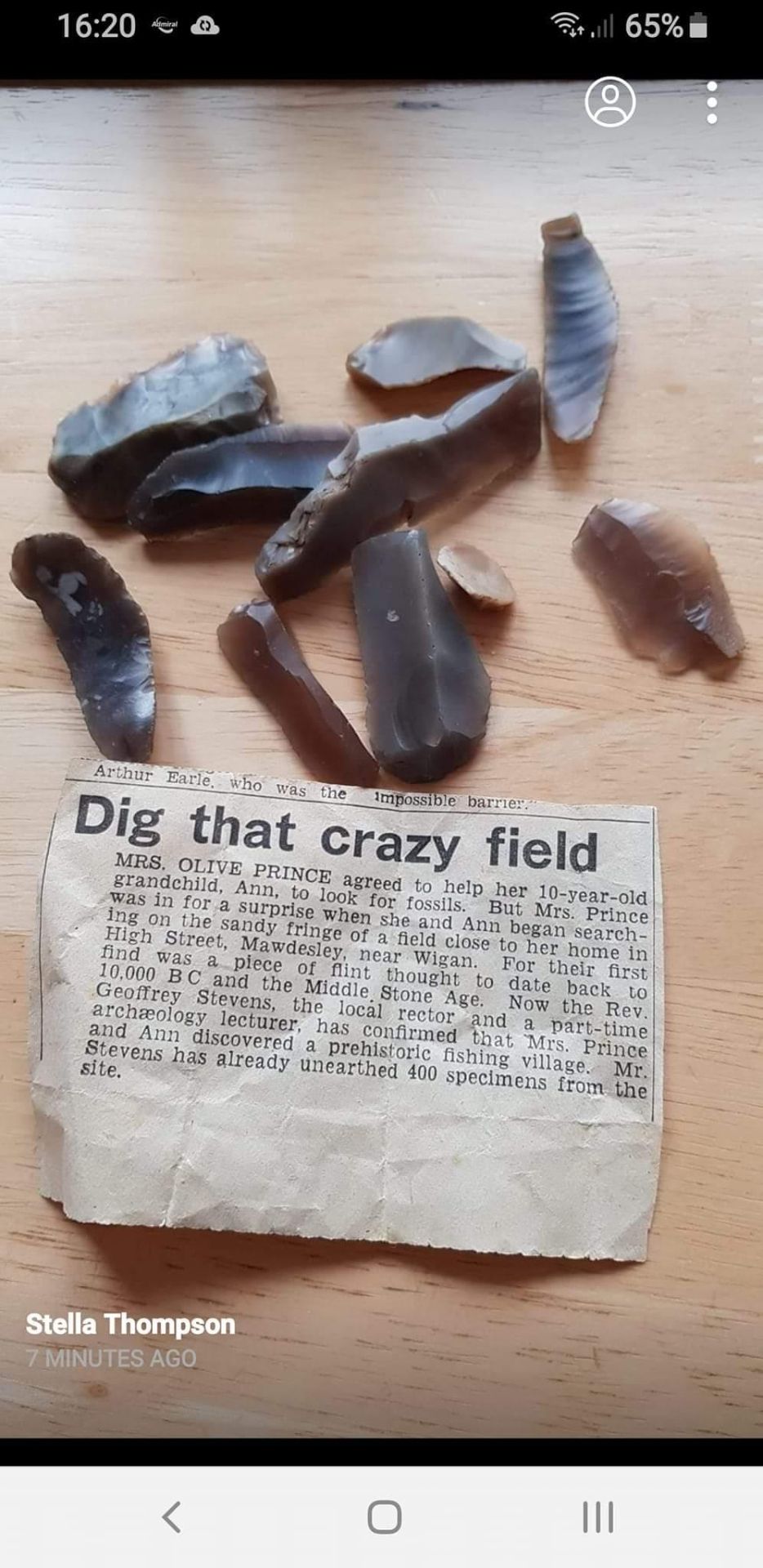
Stuart Jamieson has suggested that we put together a Project recording and cataloguing archaeological finds from Mawdesley . This would start with flints found in Mawdesley :-
1. The 120 flints found by Peter Cooke are from a particular location on the Moss. There is the potential to find more from this site but the landowner is not agreeing to formal fieldwalking so scope remains limited and the field is being intensively used for crops in 2025 and 2026.
2. The Stephens Collection of 500 flints from the Blackmoor Lane site dug in the 1960's/70s held by Liverpool Museum, but not fully recorded. The Museum also has written material relating to Stephens' activity. Peter is helping Ron Cowell to examine the Museum finds and compare them with flints from Mawdesley Moss (above) and the site at Lunt Meadows.
3. The Prince Collection of 60 flints also from Blackmoor Lane which has been dispersed/lost. Stuart is in touch with a lady who found some of these flints back in her childhood and he has viewed some of the flint held by a local resident.
4. Smaller numbers of flints and other finds recorded in the North West Wetlands Survey Report.
Links
- Croston Drainage Talk References
- 11 'UK Soil Observatory Maps'
- 25 Formby Footprints
- Aspull Ring Ditch Excavation Project
- Battle of Brunanburh - Wiki page
- Battle of Brunanburh document
- Croston Flood Relief Study
- Farington Hall Excavation
- LIDAR finder
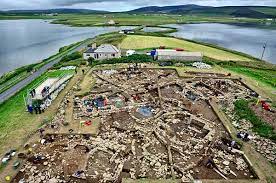
- Ness of Brodgar excavation website
- Windy Harbour Excavation
- https://www.amazon.co.uk/Mystery-Hanging-Garden-Babylon-Elusive/dp/0199662266/ref=sr_1_4?